

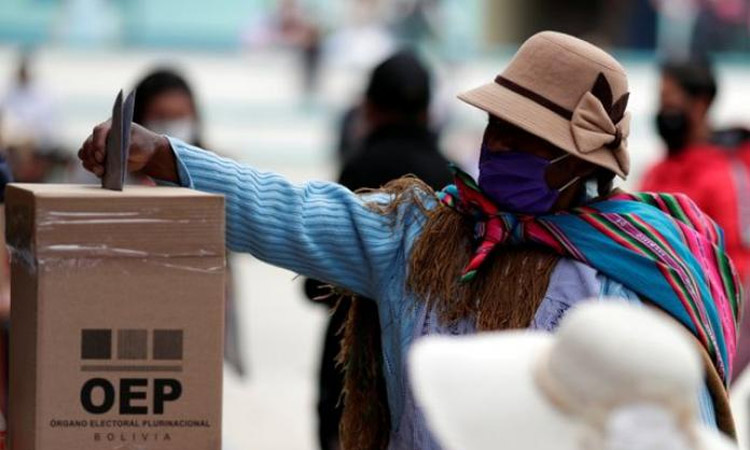
Bolivians lined up to vote on Sunday in a crossroads election many hope can restore stability after a voided ballot last year plunged the Andean nation into political crisis and ended the near 14-year administration of leftwing Evo Morales.
The vote is a test of democracy in the country that has been led by an unelected conservative interim government since late last year and will set its political course beyond Morales, whose shadow still looms large over the country. “The vote is set to be the most important since Bolivia returned to democracy in 1982,” said Carlos Valverde, a political analyst. The ballot has already been delayed by months due to the coronavirus pandemic.
Leading the race is Luis Arce from Morales’ socialist and pro-indigenous party who would tip the country back to the left. His main challenger, Carlos Mesa, a centrist, served as vice-president and then as president in the early 2000s. Polls show Arce ahead but suggest a second round run-off would be needed.
A last-minute decision by Bolivia’s electoral authority not to release fast-count results on Sunday night, citing issues with the system, has added a layer of tension. Exit polls and partial official results will be published, but it is not clear when the results of the official count will be released.
Arce, who earlier this week suggested the only way his rivals could win was “through fraud,” also moved to calm rhetoric that has led some to worry about a return of violence that rocked the country last year and left scores dead.
“Let’s hope that today and the following days pass peacefully. In the MAS we are committed to a democratic solution, we do not take power by arms, we do it through a democratic way,” he told reporters after voting. The vote, carried out in person despite the coronavirus pandemic, will be a test of the left’s clout in Latin America. Morales was an iconic and long-lasting figure in a wave of leftist presidents in the region over the last two decades.
Bolivia erupted in violence late last year when Morales sought a fourth term in a disputed election that has since been annulled. The violence cost at least 30 lives, sparked food shortages and forced Morales to resign. Since then the country has been led by a caretaker president Jeanine Áñez.
On Sunday, residents of La Paz, a city starkly divided by class and race, were voting peacefully but faced long lines meant to avoid overcrowding inside voting locations.Many said they worried the election result could lead to more violence, especially if Arce’s vote count falls short.
The socialist stronghold of El Alto, a center of last year’s violence, is seen as particularly volatile. The city was built by indigenous Bolivians atop a mountain overlooking La Paz and has grown to dwarf the capital city in population.


