

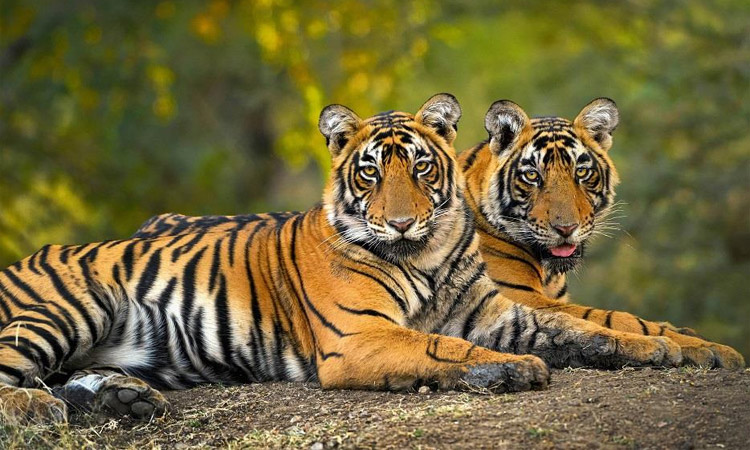
The Delhi zoo has got a Royal Bengal tigress, the first in six years, from the Kanpur zoo for breeding proposes under an animal exchange programme.
Babul Supriyo, Minister of State, Environment, Forest & Climate Change, visited Capital’s National Zoological Park, on Sunday along with senior officials and released the Bengal tigress Barkha in her enclosure.
The tigress was brought from Kanpur Zoo to NZP last month and had completed her quarantine period. Now National Zoological Park has a pair of normal coated Bengal Tigers and 5 white tigers in its captivity. NZP has been playing important role in wildlife conservation over the years. It is participating zoo for conservation breeding of 5 species namely, Sangai Deer, Asiatic Lion, Bengal Tiger, One Horned Rhino and Red Jungle Fowl.
NZP did remarkably well in conservation breeding of Sangai Deer and achieved historical success in increasing their population in captivity which has been further shared with Manipur zoo as well. The breeding of Sangai Deer has been extremely successful this year so far with 20 surviving fawns and their healthy mothers.
Babul Supriyo also launched newly created official website of the NZP which has included online facility for booking of entry e-tickets. This facility will start with the reopening of zoo in near future.
A Birding Site’ which were released by the minister in the office of Director NZP. Babul Supriyo, also released a poster of NZP depicting ‘60 glorious years of conservation in the heart of the capital’. It is important to underline that National Zoological Park has completed 61 years in the conservation of wild animals in captivity and have a long history in the fields of conservation education and conservation breeding.
The zoo was designed by famous Carl Hagenbeck on the lines of modern concept of moated enclosures where visitors can see the animals without any visual obstructions and that there is plenty of space to move around interspersed with woodlands, lawns, gardens, water bodies. This ‘immersion approach’ imparted a unique look to the National Zoological Park which is the USP of the Park. It was a revolutionary approach at that time and it gave the visitors pleasure of viewing the freely moving wild animals in their natural habitats.


